Dental Bone Grafting
Dental Bone Grafting
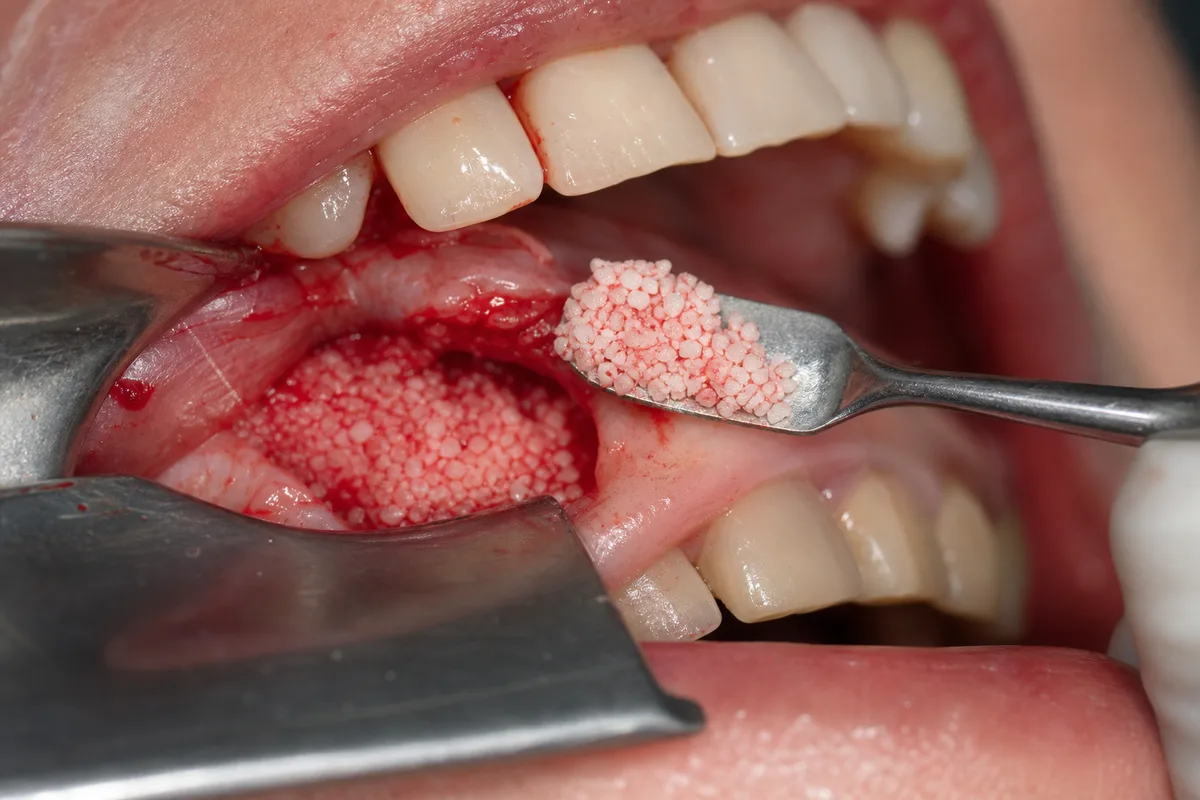
Dental bone grafting adds bone material to the jaw where bone has been lost or is too thin. The goal is to rebuild a stable foundation, most often so a tooth replacement such as a dental implant has enough support.
Why bone loss happens
The jawbone depends on natural tooth roots to stay strong. When that stimulation goes away, the bone can gradually shrink. Common causes include:
- Missing teeth — bone can recede in the area where a tooth was lost or extracted.
- Gum disease — advanced periodontal disease can break down the bone around teeth.
- Injury or infection — trauma or infection can damage the bone structure.
- Long-term denture wear — the jaw can change shape over time.
When a graft is considered
Patients usually look into bone grafting when they are planning dental implants, or after an extraction when they want to preserve the area. Grafting material may come from different sources, and the right choice depends on your mouth and your treatment goals. Healing time also varies from person to person.
Planning with our team
Dr. Sami Hersel has extensive training in implant dentistry as well as restorative and general dentistry. He emphasizes patient education, so you can expect your questions to be welcome. Digital X-rays are part of our comprehensive dental examination and let us look at what is happening beneath the surface of your teeth and gums.
If you have missing teeth or have been told your jawbone may be thin, ask our team whether bone grafting could be part of your plan.
This content is for general information only and isn't dental or medical advice. Talk with your dentist or orthodontist about your own situation. If you have a medical emergency, call 911.