Dental Bridges
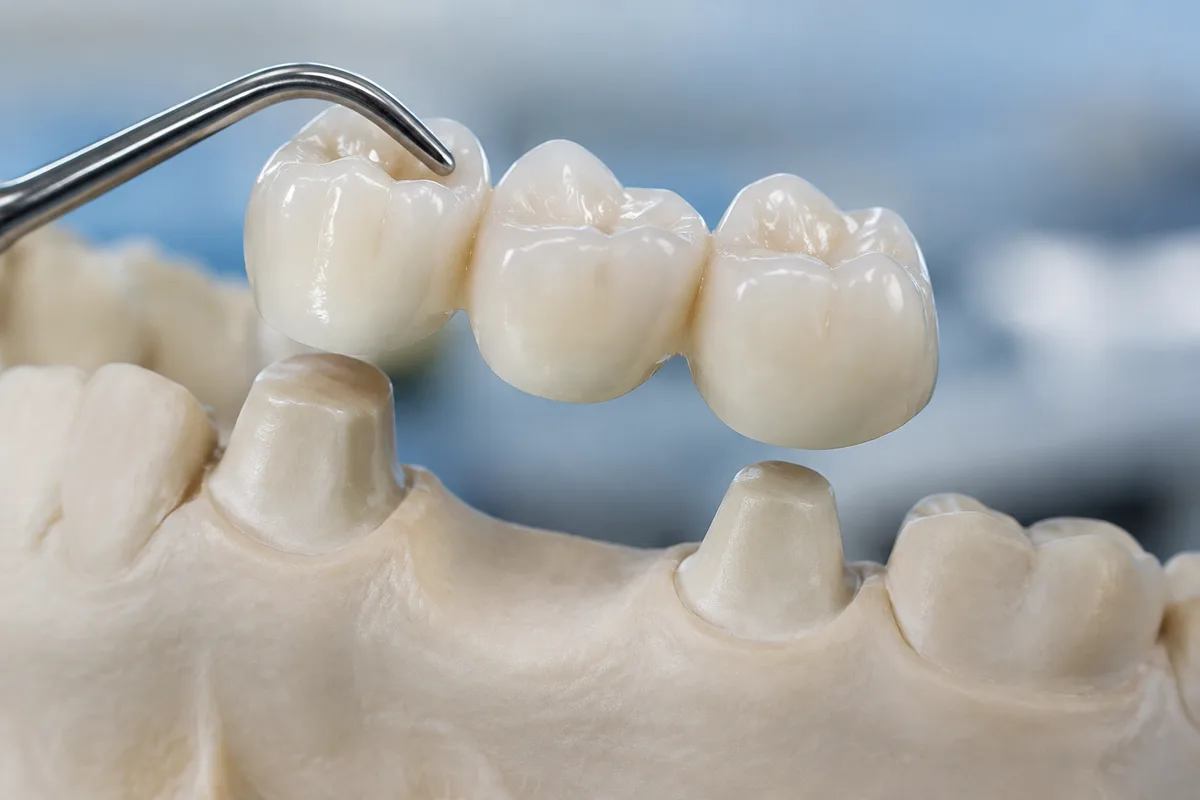
Dental Bridges
A dental bridge replaces one or more missing teeth by spanning the gap with a custom-made replacement tooth held in place by the teeth or implants beside the space. People often look into bridges when a tooth has been lost to decay, injury, or extraction and they want to restore their bite and smile.
How a Bridge Is Built
- Pontic — the artificial tooth that fills the gap.
- Abutment teeth — the natural teeth on either side of the space that support the bridge, often with crowns.
- Implant support — in some cases, dental implants rather than natural teeth anchor the bridge.
Why Replace a Missing Tooth?
A gap can affect more than appearance. Neighboring teeth may drift toward the space, the opposing tooth can shift, and chewing or speaking may feel different. Replacing the tooth can help keep your bite balanced and spread the forces of chewing more evenly.
Is a Bridge Right for You?
The right option depends on the health of your neighboring teeth, your gums, and the bone beneath the gap. Bridges, implants, and partial dentures are all ways to replace missing teeth, and each suits different situations. Our comprehensive exam includes digital X-rays, which help us look at the teeth and supporting structures around a gap.
Dr. Sami Hersel has training in restorative dentistry and implant dentistry, and he emphasizes educating patients so they understand their choices. If you have a missing tooth, our team can talk through your options with you.
This content is for general information only and isn't dental or medical advice. Talk with your dentist or orthodontist about your own situation. If you have a medical emergency, call 911.