
Dental Crowns
Dental Crowns
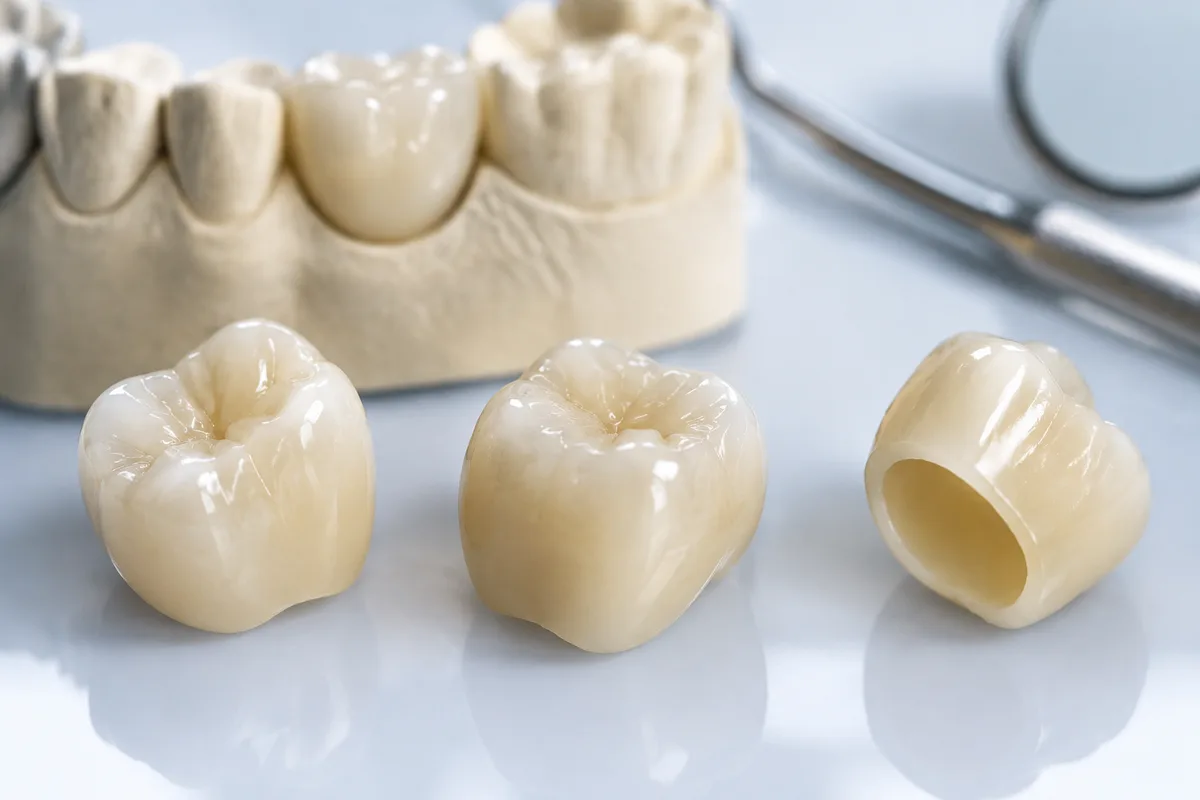
A dental crown is a tooth-shaped cap that fits over a tooth to restore its shape, strength, and appearance. Crowns are a common way to protect a tooth that has been weakened by decay, cracking, or a large filling.
When a crown may be recommended
Patients often seek a crown for one of a few reasons:
- Large cavities — when too little healthy tooth remains to hold a filling securely.
- Cracked or worn teeth — a crown can hold a damaged tooth together and protect it from further wear.
- After a root canal — treated teeth can be more fragile, and a crown is often placed to protect them.
- Dental implants and bridges — crowns replace the visible part of a missing tooth or anchor a bridge.
- Appearance — a crown can cover a misshapen or heavily discolored tooth.
Materials and what to expect
Crowns can be made from materials such as porcelain, ceramic, metal alloys, or a combination. The right choice depends on the tooth's location, how much you bite and chew on it, and the look you want. Getting a crown generally involves preparing the tooth, taking an impression or digital scan, and fitting the final restoration. Dr. Hersel can explain which option suits your tooth and walk you through the steps for your situation.
Caring for your crown
A crown protects the tooth beneath it, but that tooth can still develop decay at the edges. Brushing twice a day, flossing daily, and keeping up with regular checkups help your crown last. Digital X-rays, included in our comprehensive dental exam, let us look at the tooth and gum beneath and around a crown without any cutting.
If you have a tooth that is cracked, sensitive, or heavily filled, contact our office to talk through your options.
This content is for general information only and isn't dental or medical advice. Talk with your dentist or orthodontist about your own situation. If you have a medical emergency, call 911.