3D Dental Printing
3D Dental Printing
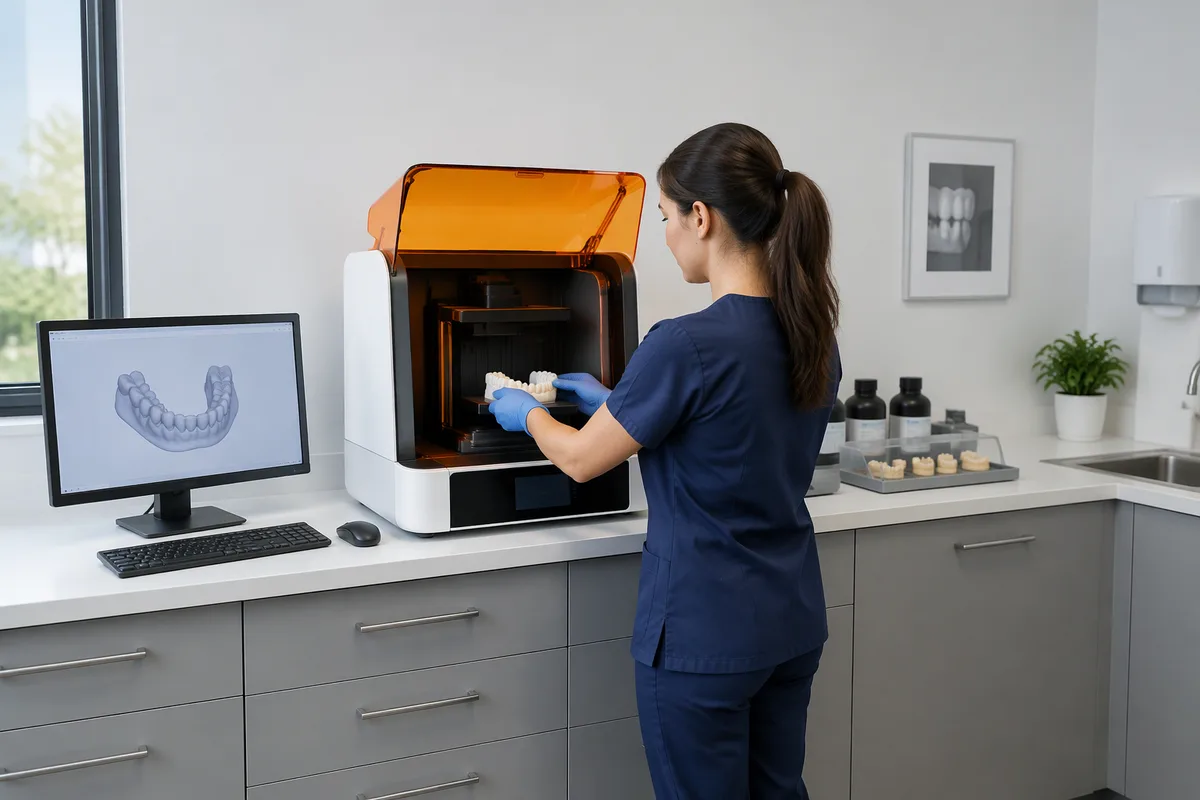
3D dental printing turns a digital scan of your mouth into a physical object, such as a model of your teeth, a surgical guide or a custom appliance. At Brilliant Dental Group, in-office 3D printing makes precise dental models, guides and appliances from your digital scan. This page explains how the technology works and what it can mean for your care.
What 3D Dental Printing is
A 3D printer builds an object one very thin layer at a time, following a digital design. In dentistry, that design starts with a scan of your teeth and gums. Software turns the scan into a three-dimensional file, and the printer builds it in a material suited to the job.
Traditionally, dental models and appliances began with an impression tray filled with putty or paste. The impression was poured in stone to make a model, and that model was used to shape whatever you needed. Each step could introduce small distortions, and the process often meant waiting while items were made elsewhere.
Digital printing replaces much of that chain. The scan is already exact, and the printer reproduces it directly. Common things printed in dentistry include:
- Dental models — accurate replicas of your teeth and bite for planning and design.
- Surgical guides — templates that help direct the placement of an implant.
- Appliances — custom-fitted items such as night guards, mouthguards and aligner-related trays.
How we use it at Brilliant Dental Group
Our 3D printing is done in our office and is built around your digital scan. It works alongside our digital impressions, a quick scan that replaces messy impression trays and gives an accurate picture of your teeth. The scan is the starting point, and printing turns it into something we can hold, check and use.
It also fits with our other digital tools. Digital smile design lets you preview planned cosmetic changes, and printed models can support that kind of planning. Computerized bite analysis measures how your teeth meet, and the information it gives about your bite can help guide appliances made to fit you.
Printed models, guides and appliances are useful in many areas of care, including implant dentistry, restorative work, clear aligners, night guards and mouthguards. Dr. Sami Hersel has extensive training in cosmetic, implant and restorative dentistry as well as orthodontics. Ask our team which of these applies to your treatment and how printing might fit into it.
What it means for you
Because printing starts from a digital scan, you may be able to skip the traditional impression tray altogether. Many people find that tray unpleasant, especially if they have a strong gag reflex. A scan is also easier to review with you, since we can show you an image of your teeth on screen.
Accuracy is another benefit. A precise model or guide helps a dentist plan carefully and check how a restoration or appliance will fit before it reaches your mouth. A well-fitting night guard or mouthguard is also more comfortable to wear, and an appliance that fits well is more likely to be worn consistently.
Making items in the office can also help communication. A physical model lets us point to exactly what we see and explain your options clearly. Depending on the treatment, in-house production may also reduce the back-and-forth that outside fabrication can involve. Your care team can tell you what to expect for your own plan.
What to expect during your visit
Before your visit, there is usually little to prepare. Tell us about your health history and any concerns, such as clenching, jaw discomfort or a planned cosmetic change, so we can decide what is worth making for you.
During the visit, the first step is the digital scan. A small handheld scanner is moved over your teeth and gums while the image builds on a screen. It does not involve trays or setting material. Most people find it more comfortable than a traditional impression, though experiences differ.
After the scan, the file is prepared for printing. The printing itself happens in our office and takes some time, and how long depends on what is being made and your treatment plan. Your team will explain the timing for your situation. If an appliance is part of your care, you will be shown how to wear and look after it.
Frequently asked questions
Is 3D dental printing safe?
Printing happens outside your body. It produces models, guides and appliances from your scan, and the scan itself does not cut or alter anything. Any item that goes in your mouth is made from materials intended for dental use. If you have an allergy or sensitivity to a material, tell us so we can discuss it.
Does it hurt?
Taking the scan does not involve cutting or injections. It is a surface scan of your teeth and gums. Some people notice the scanner moving around the back of the mouth, but the printing itself happens away from you. If you feel uneasy about any part of a visit, let our team know.
How long does it take?
The time depends on the item being printed and on your treatment plan. A simple model takes less time to produce than a detailed guide or appliance. Ask our team for an estimate for your own care.
Who is 3D dental printing suitable for?
It can be useful for many patients, including those who need a night guard, a mouthguard, aligners, or planning for implants or cosmetic work. Whether it is the right choice depends on your needs and your dentist's recommendation. An exam is the best way to find out if it fits your situation.
If you would like to know how 3D dental printing could fit into your care, book a visit or get in touch with Brilliant Dental Group and ask our team.
This content is for general information only and isn't dental or medical advice. Talk with your dentist or orthodontist about your own situation. If you have a medical emergency, call 911.