Computerized Bite Analysis
Computerized Bite Analysis
Every time you chew, speak, or clench, your upper and lower teeth meet with a certain amount of force. When that force is spread unevenly, some teeth, restorations, or jaw joints can take more strain than they should. Computerized bite analysis measures how your teeth come together so uneven pressure can be found and balanced. This page explains how it works and what it means for your care at Brilliant Dental Group in Burbank.
What computerized Bite Analysis is
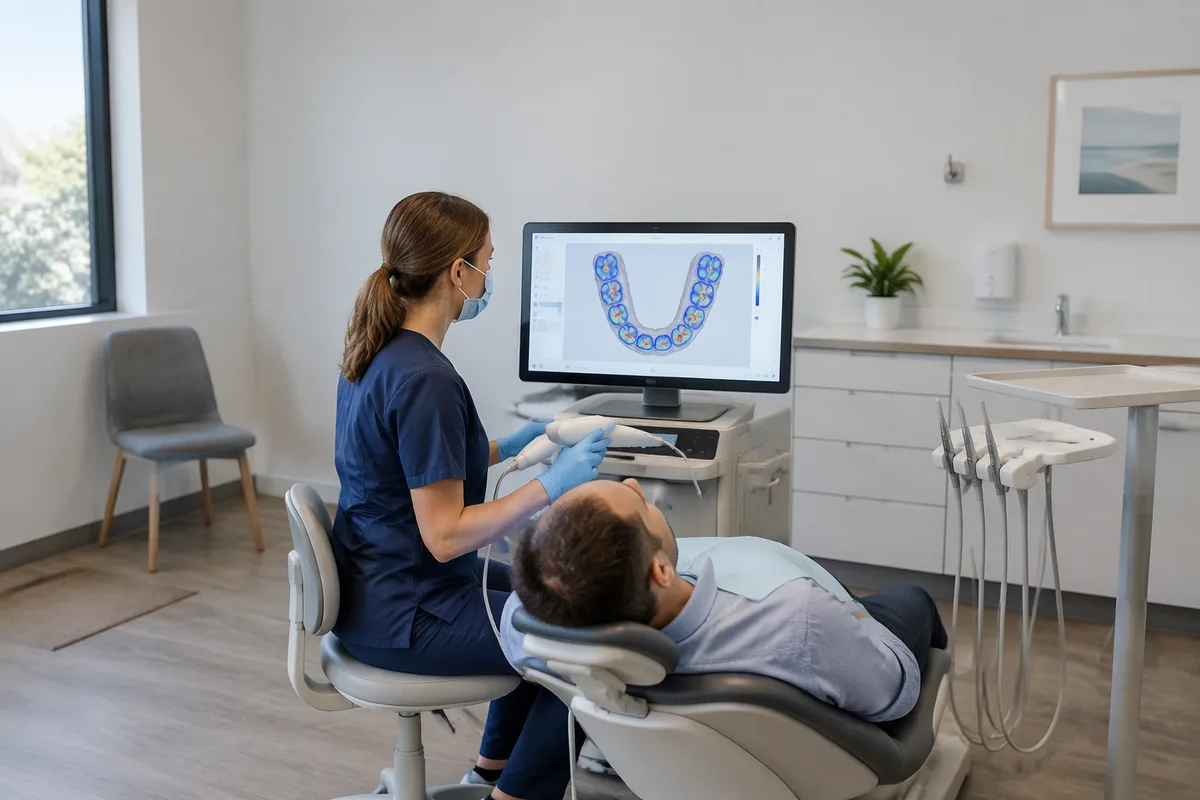
Computerized bite analysis is a way of recording and measuring your bite with digital technology. In general, a thin sensor is placed between your teeth and you close down as you normally would. Software then shows which teeth touch first, which teeth carry the most force, and how the contact changes as you close.
The traditional method relies on colored marking paper. You bite on the paper, it leaves marks on your teeth, and the dentist judges the bite by eye. That approach shows where teeth touch, but it can't show how hard they press or in what order contact happens. A computerized reading adds that information, so decisions about your bite rest on measurements as well as visual judgment.
The results are usually displayed on a screen as a visual map or graph. That makes it easier to see patterns, such as one side of the mouth taking more load than the other.
How we use it at Brilliant Dental Group
Our practice describes computerized bite analysis as a way to measure how your teeth meet, helping us find and balance uneven pressure. It is one of the on-site tools we offer, alongside digital X-rays, digital impressions, and digital smile design.
Bite information is relevant to many kinds of dental care. In general, a balanced bite matters when a dentist is considering:
- Jaw and TMJ concerns — bite imbalance is one factor dentists look at when a patient has jaw discomfort.
- Night guards — for people who clench or grind, knowing how the teeth meet can inform the appliance.
- Crowns, bridges, inlays, and onlays — a new restoration needs to fit comfortably with the opposing teeth.
- Implants and dentures — replacement teeth work best when chewing forces are shared sensibly.
- Clear aligners — tooth movement changes how the teeth meet, so the bite is worth understanding.
Our dentist, Dr. Sami Hersel, has training in restorative and general dentistry as well as orthodontics, and he emphasizes educating patients so problems can be prevented. If you wonder whether a bite analysis makes sense for your situation, ask our team.
What it means for you
The main benefit is clarity. Instead of guessing why a tooth feels sore or why a filling seems “high,” you and your dentist can look at the same on-screen picture of your bite.
- Accuracy — measuring force and timing gives more detail than marks on paper alone.
- Protection for your teeth — reducing concentrated pressure can help limit wear, chipping, and strain on dental work.
- Better communication — seeing your own results makes it easier to understand why an adjustment or treatment is suggested.
- Comfort — a well-balanced bite is part of making chewing and jaw function feel natural.
Because the reading is digital, it can also be saved and compared later, which helps you see whether a change has made a difference.
What to expect during your visit
You don't need to prepare in any special way. Come as you normally would, and tell us about anything you've noticed, such as sore teeth, jaw clicking, morning headaches, or a restoration that feels off.
During the analysis, a thin sensor is positioned in your mouth. You will be asked to bite down gently and may be asked to repeat the motion a few times so the readings are consistent. In general, the recording itself is brief, often just a few minutes. Most people feel only the slight presence of the sensor, with no needles or drilling involved.
Afterward, your dentist can review the results with you on screen and explain what they show. If the bite looks balanced, that is useful to know. If there are areas of heavy pressure, your dentist will discuss options for addressing them. Ask our team about what a recommended next step would involve.
Frequently asked questions
Is computerized bite analysis safe?
Bite sensors work by measuring contact and pressure, not by using X-rays, so the process is generally considered safe. You simply bite down on a thin sensor. If you have questions about your own health history, mention them to our team.
Does it hurt?
It is not intended to be painful. You are only closing your teeth together, much as you do when eating. If you have a sore tooth or jaw, tell us beforehand so we can be considerate during the process.
How long does it take, and how often is it needed?
The recording itself is generally quick, often just a few minutes. How often a bite analysis is useful depends on your needs, such as new dental work or ongoing jaw concerns. Your dentist can advise you.
Who is it suitable for?
Anyone with natural teeth, restorations, or replacement teeth can potentially benefit from learning how their bite works. It is especially of interest to people who clench or grind, have jaw discomfort, or are planning restorative or cosmetic treatment. We can help you decide whether it fits your situation.
If you'd like to learn more about computerized bite analysis, book a visit or get in touch with Brilliant Dental Group, and we'll be glad to answer your questions.
This content is for general information only and isn't dental or medical advice. Talk with your dentist or orthodontist about your own situation. If you have a medical emergency, call 911.