Drill-Free Air Abrasion
Drill-Free Air Abrasion
Air abrasion gently removes small areas of decay with a fine stream of particles, often without a drill. At Brilliant Dental Group in Burbank, it is one of the on-site tools we can use when a small cavity needs to be treated and preserving healthy tooth structure matters.
What drill-Free Air Abrasion is
Air abrasion works a bit like a very precise, miniature sandblaster. A handpiece directs a narrow stream of fine particles, propelled by compressed air, at a specific spot on the tooth. The particles wear away decayed enamel or dentin, and a small suction device removes the debris along with them.
It was developed as an alternative to the traditional rotary drill, which cuts with a spinning bit. A drill produces vibration, a high-pitched sound, and some heat. Air abrasion does not rely on a spinning bit, so the experience can feel quite different, and it can be more selective about where material is removed.
It is best suited to small, early-stage problems. Common uses include:
- Small cavities — removing limited areas of decay, especially on the chewing surface or in shallow spots.
- Surface preparation — lightly roughening a tooth so a bonded filling material can attach well.
- Minor surface stains or defects — cleaning out tiny pits or grooves before they are sealed or filled.
Air abrasion is not right for every situation. Large cavities, deep decay, and removing existing crowns or older fillings generally call for other methods.
How we use it at Brilliant Dental Group
Air abrasion is part of our on-site technology, and it fits naturally with our restorative care, particularly tooth fillings. Dr. Sami Hersel, our dentist, has training in restorative and general dentistry and focuses on personalized care and on teaching patients how to prevent dental disease.
Choosing a method starts with understanding what is happening in the tooth. Our digital X-rays are included in our comprehensive dental examination and let us see inside your teeth and gums without cutting them open. That information helps determine whether a spot of decay is small enough for air abrasion or needs a different approach.
Air abrasion also fits with our interest in conservative care. Our services include biomimetic dentistry, which is built around respecting natural tooth structure. For children, our children’s dentistry services may also involve small, early areas of concern where a gentler approach is worth discussing.
What it means for you
The advantages of air abrasion are mostly about how the treatment feels and how much of your natural tooth is kept.
- Less vibration and noise — many people find the absence of a drill’s whine and buzz easier to tolerate, which can help anxious patients and children.
- Conservative removal — the stream can be aimed at the decayed area, which helps preserve healthy tooth structure.
- Less heat and pressure — without a spinning bit, there is less friction on the tooth.
- Good bonding surface — the lightly textured surface it creates can help tooth-colored filling material adhere.
It is also a good fit for people who put off dental work because they dislike the drill. Treating a small cavity early is usually simpler than waiting until it grows.
What to expect during your visit
Before. Your visit begins with an examination and, when needed, digital X-rays so we can see the size and location of the decay. We will explain whether air abrasion is a good option for that tooth, or whether another method makes more sense. Nothing special is needed on your part, but let us know about any health conditions, allergies, or concerns about sensitivity.
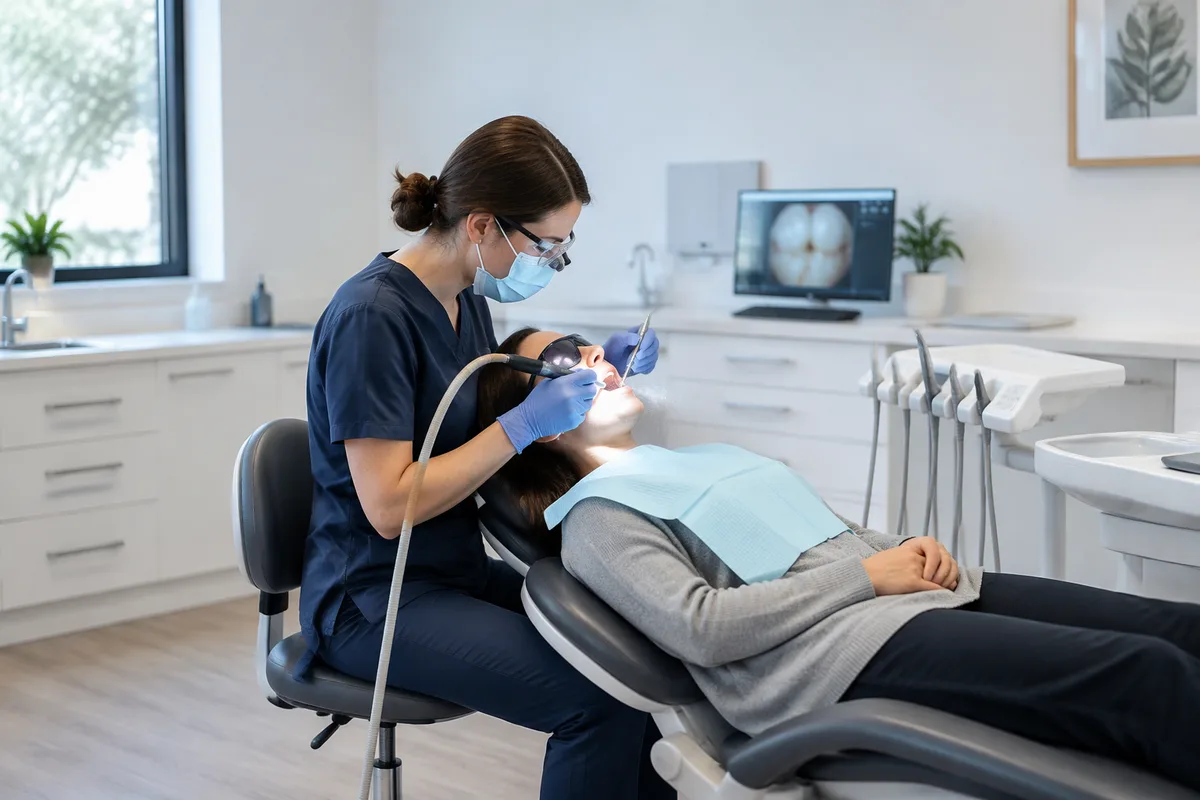
During. You and the team will wear protective eyewear, and the area around the tooth is protected. The handpiece is held close to the tooth and releases the fine stream while suction collects the particles. Patients often describe a light sensation of air and a faint hissing or sandy sound rather than the vibration of a drill. Whether numbing is used depends on the tooth and your comfort, so ask our team what to expect for your situation. Once the decay is removed, the tooth is typically restored with a filling material.
After. Follow any instructions we give you about eating and sensitivity. Appointment length varies with the number and size of the areas being treated, so our team can give you a better idea when planning your care.
Frequently asked questions
Is air abrasion safe?
Air abrasion is a well-established dental technique when used on appropriate cases. Protective eyewear and suction keep the particles controlled during treatment. Tell us about any respiratory conditions or allergies beforehand so we can plan accordingly.
Does it hurt?
Many patients find it more comfortable than a drill because there is less vibration, noise, and heat. Comfort still depends on the tooth, the depth of the decay, and your own sensitivity. Our team can talk through your options for staying comfortable before treatment begins.
Can it replace the drill completely?
No. Air abrasion works best on small, shallow areas of decay. Larger cavities, deep decay, and work such as removing old restorations may still require traditional instruments. We will tell you which approach suits your tooth.
Who is a good candidate?
People with small or early cavities are the most likely candidates, including children and adults who feel uneasy about the sound and sensation of a drill. An exam and X-rays show whether your tooth is a good match. If you are unsure, just ask.
If you would like to learn whether drill-free air abrasion is right for you or your child, contact Brilliant Dental Group or book a visit, and our team will be glad to answer your questions.
This content is for general information only and isn't dental or medical advice. Talk with your dentist or orthodontist about your own situation. If you have a medical emergency, call 911.