
Nitrous Sedation
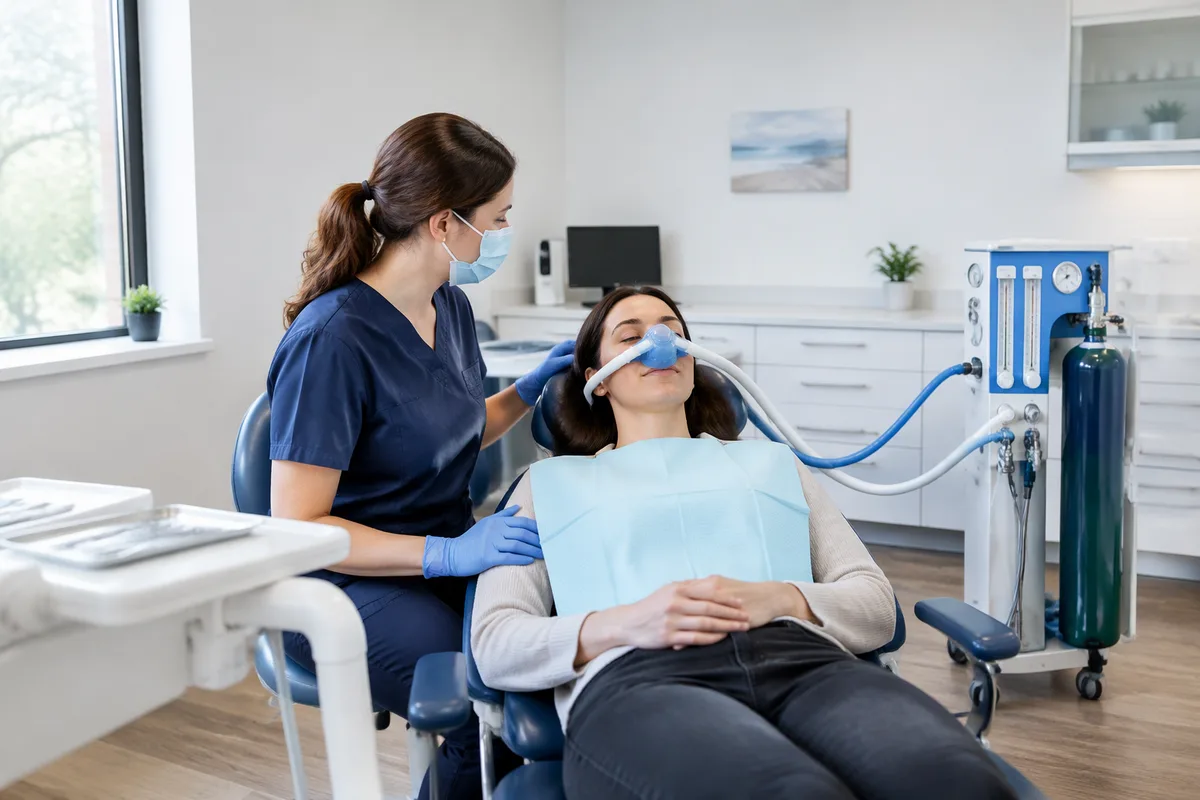
Nitrous Sedation
Nitrous oxide, often called laughing gas, is a mild form of sedation that helps you feel calm and relaxed during dental treatment and wears off quickly afterward. At Brilliant Dental Group, nitrous sedation is one of the on-site options available for patients who would like a more relaxed visit. This page explains what it is, how it works, and what to expect.
What nitrous Sedation is
Nitrous oxide is a colorless gas that is breathed in together with oxygen through a small mask that fits over the nose. Within a few minutes, most people notice a light, easy feeling. Worries tend to fade, and time may seem to pass more quickly. Some people feel mild tingling or warmth in their arms and legs, or a sense of heaviness. You stay awake and able to respond throughout.
It is considered a minimal form of sedation. That separates it from deeper options such as oral sedatives or IV sedation, which cause a heavier drowsiness and usually call for more planning around the appointment. Nitrous oxide has been used in dentistry for a very long time. It is popular because the level can be adjusted as treatment goes on, and its effects fade soon after the gas is turned off and you breathe plain oxygen.
For many people, the gas offers a gentler alternative to simply “getting through” a procedure while tense. It does not replace numbing medication when that is needed for a procedure. It works alongside it by easing anxiety and tension.
How we use it at Brilliant Dental Group
Nitrous sedation is listed among our on-site facilities, and it fits with our broader Sedation Dentistry service. The goal is to help you feel calm and relaxed during treatment, then return to your day soon after.
It can be paired with other care we offer. Patients who feel uneasy about visits sometimes find it helpful for procedures such as:
- Tooth fillings — for people who find the sounds and sensations of restorative work stressful.
- Tooth extractions — to ease nerves before a procedure many people dread.
- Root canal therapy — a longer visit during which staying relaxed can matter.
- Deep cleanings — for patients who tense up during periodontal care.
Whether nitrous sedation makes sense for you depends on your health, your comfort level, and the treatment planned. Our team can talk through those details with you before your appointment.
What it means for you
The main benefit is comfort. Dental anxiety is common, and for some people it leads to putting off care until a small problem becomes a bigger one. A calmer experience can make it easier to keep up with regular visits.
- Relaxation — the gas takes the edge off nerves without putting you to sleep.
- Quick recovery — effects wear off soon after the mask is removed and oxygen is breathed.
- Adjustability — the amount of gas can be raised or lowered during the visit as needed.
- Communication — because you stay awake, you can tell the team how you feel or ask for a pause.
- Easier cooperation — a relaxed patient can often hold still more comfortably, which helps longer procedures go smoothly.
What to expect during your visit
Before. Let the team know about your medical history, any medications you take, and whether you could be pregnant or have trouble breathing through your nose. A cold or stuffy nose can make the gas harder to breathe in. Ask whether you should adjust eating beforehand, since some people feel better with a light meal rather than a heavy one.
During. A small mask is placed over your nose, and you breathe normally. In a few minutes you may feel lighter, warm, or pleasantly distant from the surroundings. Treatment then proceeds as planned, with local anesthetic if your procedure needs it. If you ever feel uncomfortable, say so and the gas level can be changed.
After. When treatment ends, you breathe pure oxygen for a few minutes to clear the gas. Most people feel back to normal shortly afterward. Some feel briefly lightheaded or a little nauseated, which usually passes quickly. Ask our team about any instructions for the rest of your day, including when you may eat and whether you should wait before doing anything demanding.
Frequently asked questions
Is nitrous oxide safe?
Nitrous oxide has a long record of use in dentistry and is considered a well-tolerated form of sedation when given with oxygen and monitored by trained staff. Your health history still matters, so tell the team about any conditions or medications. That helps them decide whether it is a good fit.
Will I be asleep?
No. You stay awake and can talk, follow directions, and respond throughout the visit. The gas simply helps you feel calm and relaxed, and you may feel less aware of time passing.
How quickly does it wear off?
The effects fade soon after the mask is removed and you breathe oxygen. That is why nitrous oxide is often chosen by people who want to relax during treatment but get back to their day afterward. If you have questions about your own plans after a visit, ask our team.
Who is nitrous sedation suitable for?
It is often considered for adults and children who feel anxious, have a strong gag reflex, or face longer procedures. It may not be right for everyone, such as people with certain respiratory conditions or who cannot breathe comfortably through the nose. Our team can review your health and recommend what fits you or your child.
If you would like to feel more at ease during dental care, contact Brilliant Dental Group to ask about nitrous sedation and schedule a visit.
This content is for general information only and isn't dental or medical advice. Talk with your dentist or orthodontist about your own situation. If you have a medical emergency, call 911.