Ultrasonic Cleaning
Ultrasonic Cleaning
Ultrasonic cleaning is a method of removing plaque and hardened tartar (calculus) from teeth using high-frequency vibrations and a gentle stream of water. Patients often search for it after hearing the term at a cleaning or reading about gum health. This page explains what it is, where it fits in dental care, and what a visit can look like.
What ultrasonic Cleaning is
An ultrasonic scaler is a handheld dental instrument with a slim tip that vibrates very quickly, too fast to see. As the tip moves along the tooth surface, the vibrations break up tartar and loosen plaque. A fine spray of water cools the tip, flushes away debris, and helps rinse the area as the work continues.
For decades, hygiene care relied mainly on hand instruments, small metal scalers and curettes that are scraped along the tooth by hand. Those tools are still valued for fine finishing and detail work. Ultrasonic instruments added a different way to loosen buildup, often with less manual scraping. Many dental teams use both approaches together.
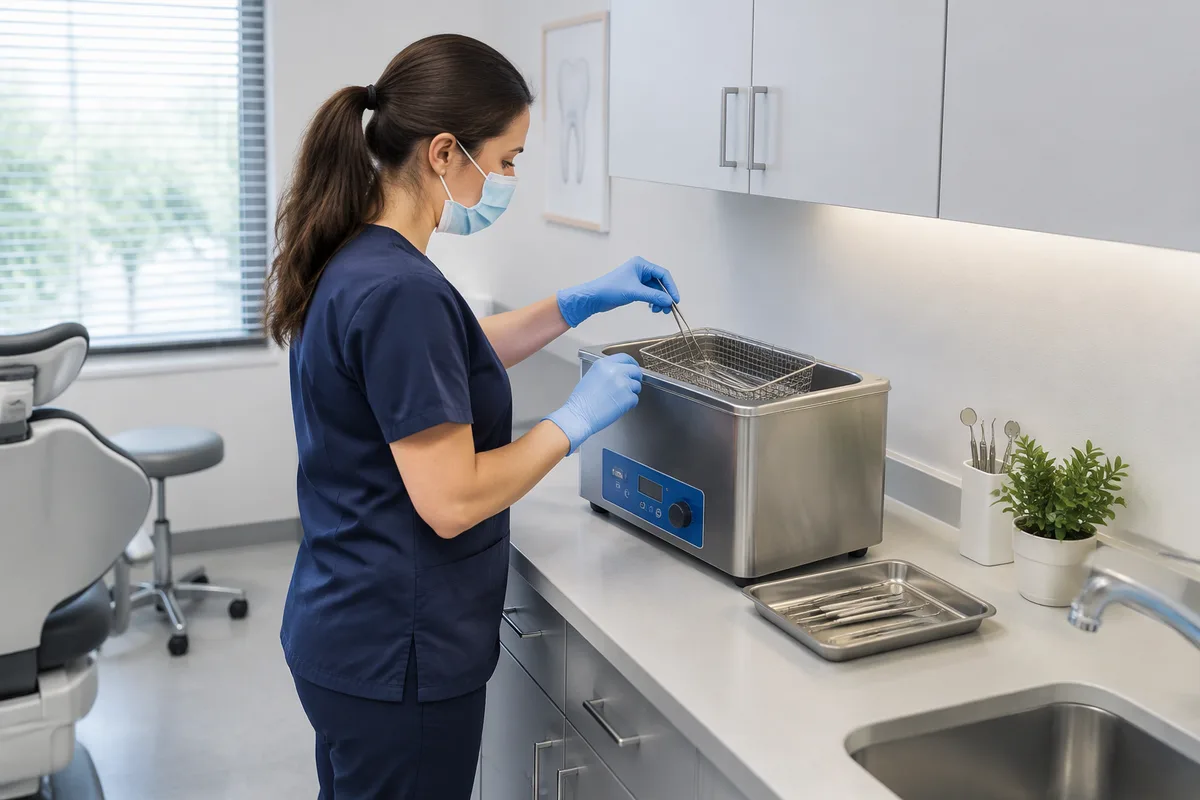
In dentistry, ultrasonic technology is also used to clean instruments. This page focuses on ultrasonic cleaning of the teeth and gumline.
- Vibration — the tip's rapid movement fractures tartar so it can be lifted away from the tooth.
- Water irrigation — the spray keeps the tip cool and carries away loosened material.
- Hand instruments — often used afterward to check the surfaces and smooth fine details.
How we use it at Brilliant Dental Group
Ultrasonic cleaning relates most closely to the hygiene-focused care we offer: Cleaning, Checkup, Exam, Scaling and Root Planing (Deep Cleaning), and Periodontal Treatments. These are the services where removing plaque and tartar is central to the visit, and where patients are most likely to encounter this kind of instrument.
Our comprehensive dental examination includes digital X-rays, which let us see what is going on inside your teeth and gums without cutting into them. That information helps show what kind of cleaning your mouth needs. Dr. Sami Hersel also places a strong emphasis on teaching and educating patients so that dental disease and oral health issues can be prevented, and cleaning visits are a natural place for that conversation.
Which tools are used for your cleaning depends on your mouth and your care plan. If you are curious whether ultrasonic cleaning will be part of your visit, ask our team and they can explain how it fits into your care.
What it means for you
Because the instrument uses vibration and water rather than only manual scraping, ultrasonic cleaning can make the removal of buildup more efficient. This is especially true for heavier tartar, which can be difficult to remove by hand alone.
- Thorough buildup removal — the slim tip can reach along the gumline and into spaces where buildup collects.
- Less hand scraping — many people find the vibration and water more tolerable than prolonged scraping.
- Gum health support — removing plaque and tartar near the gums is a key step in managing gum inflammation and periodontal disease.
- A fresher-feeling mouth — smoother tooth surfaces are easier to keep clean at home.
Cleaning does not replace daily brushing and flossing, but it removes what home care cannot.
What to expect during your visit
Before. No special preparation is generally needed for a routine cleaning. Brush and floss as usual, and let the team know about any sensitivity, gum bleeding, or medical conditions and devices such as pacemakers, since these can matter when choosing instruments.
During. You will recline in the chair while the team works around your teeth and gumline. You may hear a soft humming or whirring and feel light vibration and cool water. A small suction tip clears the water as the work goes on. Some people notice sensitivity, especially where gums are inflamed or tartar is heavy. Tell the team if anything is uncomfortable so they can adjust.
After. Your teeth may feel smooth and your gums slightly tender, particularly after a deeper cleaning. Gentle brushing and flossing help. Appointment length varies with how much buildup there is and whether you are having a routine cleaning or a deeper one, so ask our team what to plan for.
Frequently asked questions
Is ultrasonic cleaning safe?
Ultrasonic scalers are a long-established part of professional dental hygiene care when used by trained professionals. The water spray keeps the tip cool while it works. People with certain implanted medical devices should mention them beforehand, because some may call for a different approach.
Does ultrasonic cleaning hurt?
Most people feel vibration, a little pressure, and cool water. Teeth or gums that are sensitive or inflamed may feel more tender. If you are uncomfortable, say so, and the team can pause or adjust what they are doing.
How often is ultrasonic cleaning needed?
That depends on how quickly plaque and tartar build up in your mouth and on your gum health. Your dentist or hygiene team can recommend a schedule for you after your exam, and that schedule may change over time.
Who is ultrasonic cleaning suitable for?
It is used for many adults and children who need plaque and tartar removed, including people with gum concerns. Some situations call for adjustments, such as sensitive teeth or certain medical devices, so share your health history with our team before your cleaning.
If you would like to know how ultrasonic cleaning fits into your care, contact Brilliant Dental Group to schedule a visit and ask our team.
This content is for general information only and isn't dental or medical advice. Talk with your dentist or orthodontist about your own situation. If you have a medical emergency, call 911.