
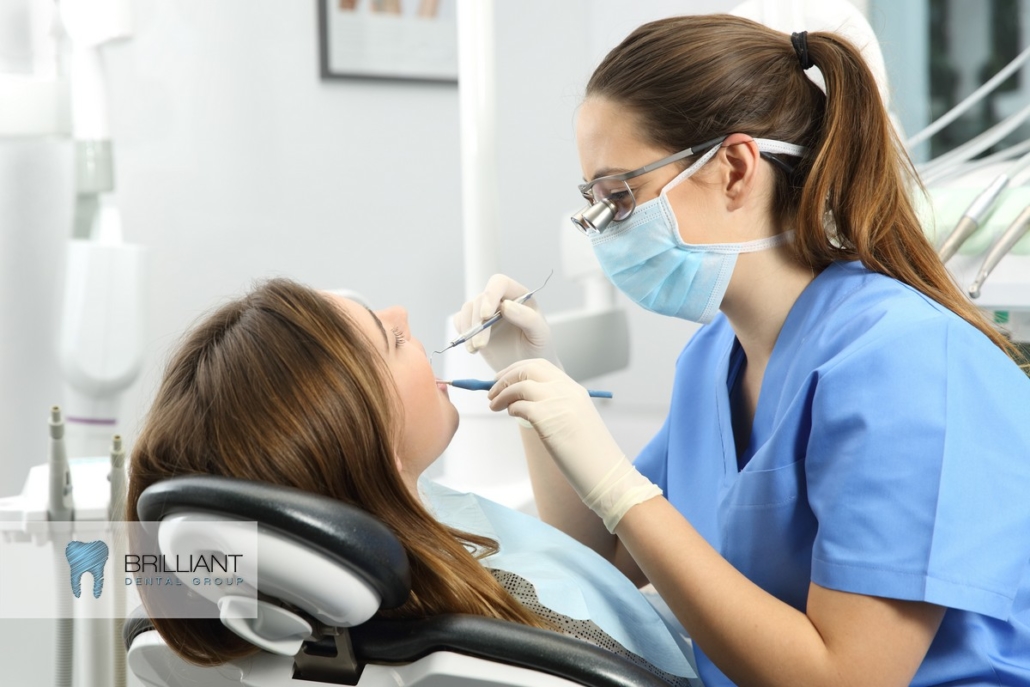
What Happens at a Dental Cleaning?
Even though you make it a habit to visit the dentist every 6 months, you may not pay attention as to what happens at a dental cleaning. While it doesn’t matter to most, there are others who prefer to know all the steps involved so that they can be informed as to what is happening to them. If you’ve ever been curious about the steps involved in your bi-annual cleaning, here they are.
The first thing that will happen during the exam is a physical exam which will be done by your hygenist. Using a tiny mirror, the hygenist will move around your mouth, checking for things such as inflamed gums, sores, gingivitis, and any source of bleeding. If they find something that seems out of the ordinary, the dentist will be called in for a second opinion. However, if everything looks alright, the hygenist can move onto the next step. Before the cleaning, the hygenist may want to take a couple x-rays of your teeth, especially if it’s been awhile since they’ve been done.
For the cleaning portion, your hygenist will once again utilise the mirror to look around your mouth while they use a tool called a scaler to clean around the gum line and between your teeth. This is the part of the exam that most patients do not enjoy, but if you brush your teeth regularly, there will be less to clean and therefore will take less time.
After the teeth have been scaled, they will be polished and scrubbed using a gritty toothpaste and a high powered tooth brush. This toothpaste will have a graelly texture and is used to scrub any light surface stains from your teeth and get rid of excess tartar.
All dental cleanings end with a good flossing. If you’re not flossing at home, this part can also be slightly uncomfortable and the gums will more than likely be sore and slightly irritated, but this will pass in as little as one hour after leaving the dental office.
For the final part of the exam, your hygenist will rinse your mouth out to get rid of anything missed, then give you a new toothbrush to tae home and a sample of floss.


Leave a Reply
Want to join the discussion?Feel free to contribute!